








respuesta corta
La mayoría de las afirmaciones “misteriosas” sobre bobinas GI se pueden atribuir a manejo de la humedad, tratamiento de superficie no especificado, abrasión o gravedad de curvatura no coincidente, no solo a la metalurgia del zinc. Los compradores que bloquean masa de recubrimiento + paquete de superficie + embalaje + notas de formación en la orden de compra cortan los bucles de reclamo antes de que comience la producción.
Utilice esta página con la familia de productos GI y la lista de verificación de PO para bobinas galvanizadas.
Mapa de defectos (lo que ven los compradores → causas frecuentes)
| Defecto | Observación | Causas frecuentes | Qué escribir en la PO/RFQ |
|---|---|---|---|
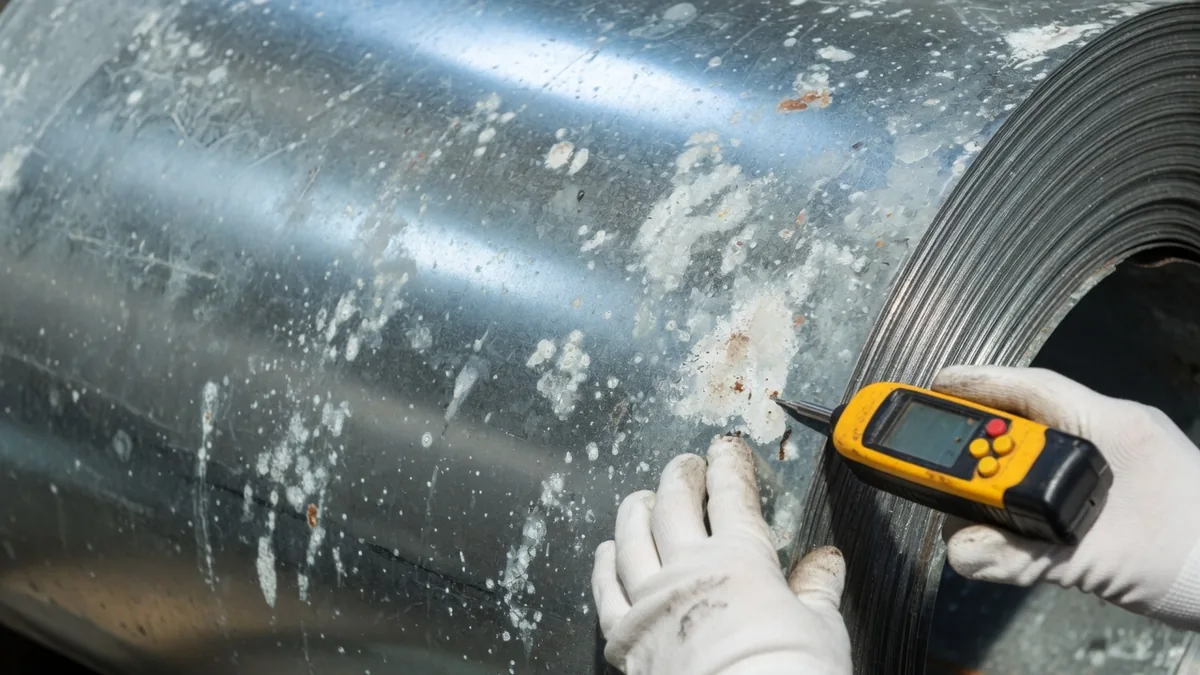
| Óxido blanco/mancha de almacenamiento húmedo | Manchas blancas en polvo o grises entre las vueltas | Condensación en las bobinas, empaquetadura impermeable dañada, pasivación débil o faltante, almacenamiento húmedo prolongado | Clase de pasivación (libre de cromato/Cr), regla seca o de aceite, embalaje apto para el transporte marítimo según el clima de destino. |
| Puntos desnudos / zinc fino | Islas tempranas de óxido rojo | Inestabilidad de la cuchilla de aire, escoria, forma de la tira, masa de recubrimiento insuficiente, manipulación de abrasivos | Designación del recubrimiento (p. ej. Z180 / Z275), base de prueba de masa del recubrimiento, notas de manipulación |
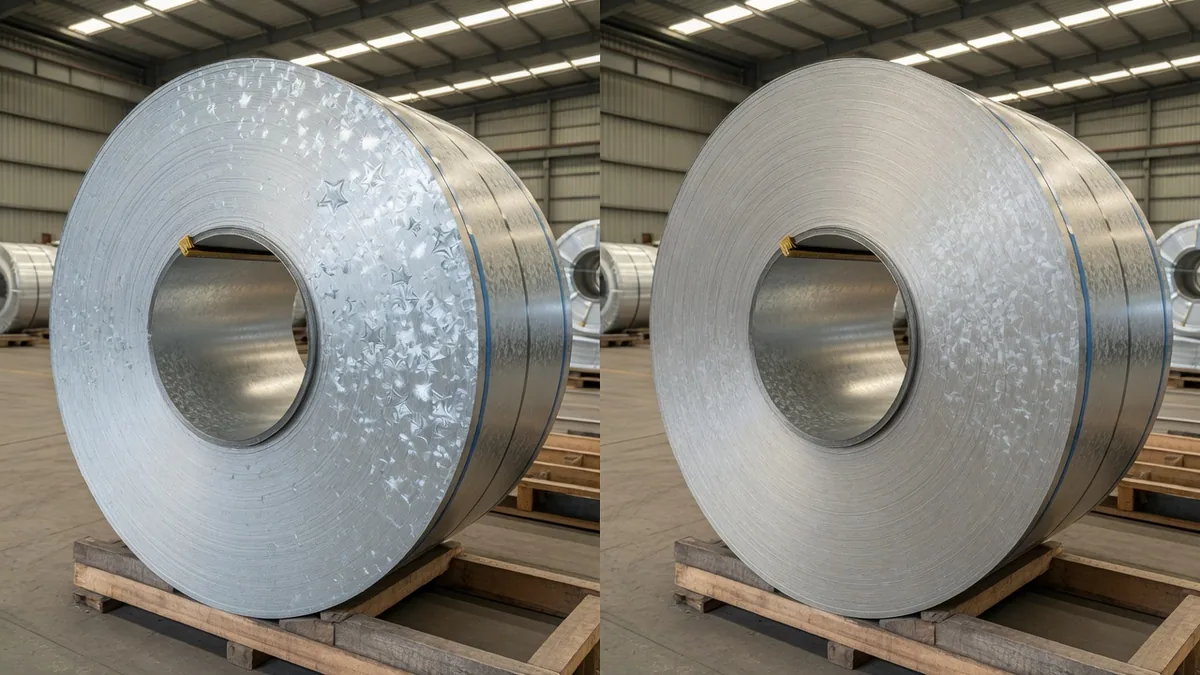
| Lentejuela no uniforme | Brillo desigual o bandas opacas | Química del baño, velocidad de enfriamiento, diferencias en el paso de la piel. | Tipo lentejuela (regular / mini / cero); mencionar los criterios cosméticos versus los de rechazo |
| El revestimiento se agrieta en curvas cerradas | Grietas de zinc en el radio exterior. | Recubrimiento pesado + sustrato de alta resistencia, radio de curvatura demasiado pequeño, conformado en seco | Grado, masa de recubrimiento, radio mínimo de curvatura/ruta de perfilado, plan de lubricación |
| Marcas negras/pulido por fricción | Pistas lineales oscuras después del perfilado | Conformado en seco sin suficiente aceite/AFP, rodillos sucios, alta tensión de entrada | Paquete de superficie para conformado; rango de aceite o AFP si es necesario |
| Rayas de aceite/superficie sucia | Rayas, adherencia de polvo pegajoso. | Lubricación desigual, peso excesivo del aceite, almacenamiento en caliente después del engrase | Aceite objetivo en banda o seco + pasivación; método de limpieza antes de pintar |
| Onda/comba del borde después del corte | Anidamiento deficiente y problemas de seguimiento | Forma entrante, tensión de hendidura, cuchillos desafilados | Tolerancia del ancho de hendidura, límite de curvatura si es crítico (producto de tira) |
| Fallo posterior en la adherencia de la pintura. | Ampollas o cáscaras en la capa orgánica. | Aceite residual, pasivación incompatible, pretratamiento incompleto | Límite residual de limpieza/aceite, clase de pretratamiento antes de PPGI o pintura de campo |
Óxido blanco: sistema logístico, no eslogan
El zinc fresco es químicamente activo. Sin tratamiento de superficie y control de humedad, las bobinas pueden desarrollar manchas de almacenamiento húmedo durante el transporte marítimo o el almacenamiento húmedo en el patio.
La prevención es un paquete:
- Pasivación: película de conversión que retarda el óxido blanco en condiciones de anidado húmedo. Clase de química del pedido: cromada, trivalente o sin cromo.
- Aceite o AFP — aceite para la formación de fricción y protección contra la humedad a corto plazo; AFP para el manejo de limpieza en líneas seleccionadas. El petróleo no es un sustituto de la pasivación en viajes largos.
- Embalaje apto para navegar: envoltura impermeable, protección de bordes, práctica desecante según lo acordado. Consulte embalaje de exportación y prevención de oxidación.
- Disciplina en el jardín: almacenamiento en seco, evite la exposición de los paquetes abiertos a la lluvia.
La masa de recubrimiento aún mantiene una reserva de corrosión
La vida al aire libre aumenta en gran medida con el espesor del recubrimiento (masa). Es por eso que los recubrimientos de clase Z275 generalmente duran más que el zinc más liviano bajo la misma atmósfera cuando el empaque y los detalles de diseño son iguales. Para seleccionar el sustrato para techos, lea también la guía de pesos de revestimiento y GI vs Galvalume.
Peso del aceite: equilibrio entre conformabilidad y limpieza.
La bobina GI industrial suele enviarse con una película ligera de aceite de laminación, pero la cantidad debe acordarse con la planta y verificarse cuando sea crítica. Un nivel insuficiente aumenta el gripado y las marcas de rayado; un exceso atrae suciedad y complica la limpieza antes de pintar o aplicar otro recubrimiento.
Ejemplo de lenguaje PO:
Surface: Cr-free passivated + light oil (target band to confirm) OR dry + passivated
Reject: heavy oil streaks that prevent painting without washing (if paint-critical)
Formar grietas y marcas negras.
Zinc pesado + sustrato de alta resistencia + radio de curvatura estrecho es una receta clásica para las grietas. Si la tira se laminará o se estampará herméticamente, analice la masa del recubrimiento frente a la formabilidad y si un recubrimiento más ligero o un grado de formación reduce los desechos.
Para paneles que salen de la planta como lámina para techos, bloquee el perfil y el ancho de la cubierta en la herramienta de perfiles para techos.
Pruebas de inspección que acortan las disputas
- Registre las pruebas de masa de recubrimiento junto con los números de bobina y de colada
- Fotos de embalaje y extremos de bobina antes de la carga.
- Notas de aceptación claras para lentejuelas cosméticas frente a defectos funcionales
- Tipo de MTC EN 10204 requerido en el pedido — verificar MTC antes del envío
Lista de verificación del comprador (copiar en RFQ)
- Estándar / grado
- Masa de recubrimiento (designación Z/G)
- Base del espesor (metal base versus total) y ancho
- Lentejuela + tratamiento superficial + aceite/AFP/seco
- Formar notas de ruta y curva mínima si son severas
- Embalaje para el clima del viaje
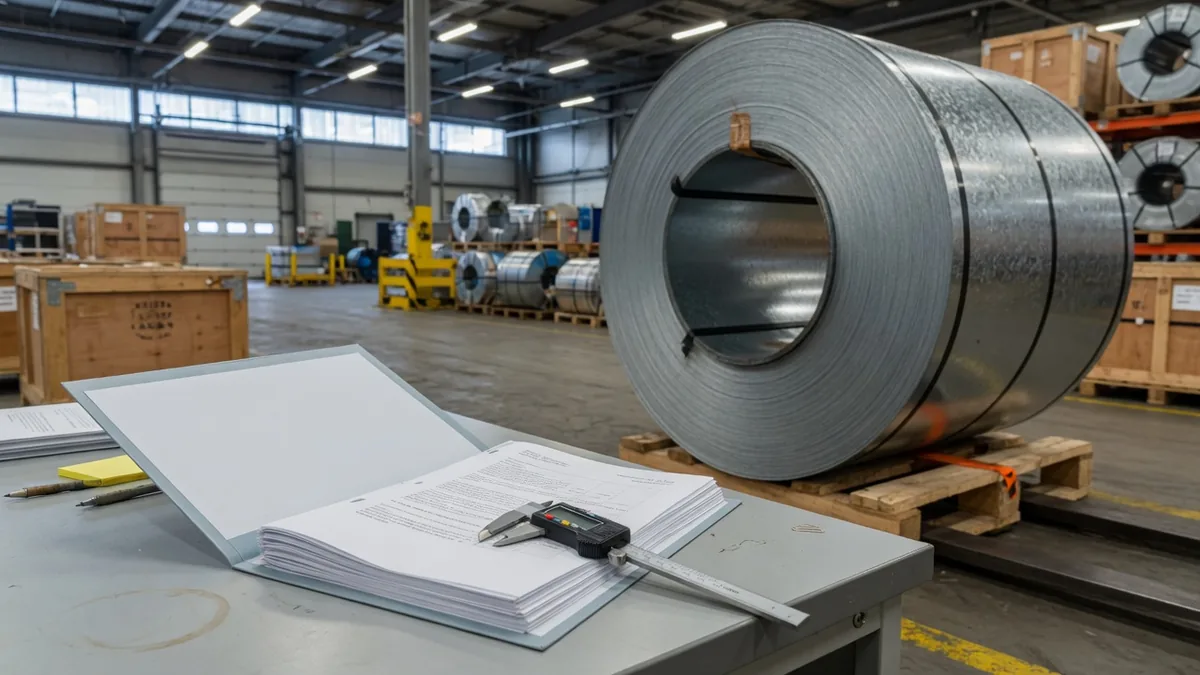
- Prepare los documentos y, si procede, una inspección independiente de terceros.
- Reglas de evidencia fotográfica para reclamos por óxido blanco o daños en los bordes
Conclusión clave
La calidad GI es un sistema: la masa de zinc establece una reserva de corrosión; pasivación y aceite gestionan la logística y el conformado; El embalaje y el almacenamiento deciden si ese sistema sobrevive al viaje. Especifique el sistema en la orden de compra, no sólo “bobina GI de buena calidad”.