








Why incomplete POs create expensive coils
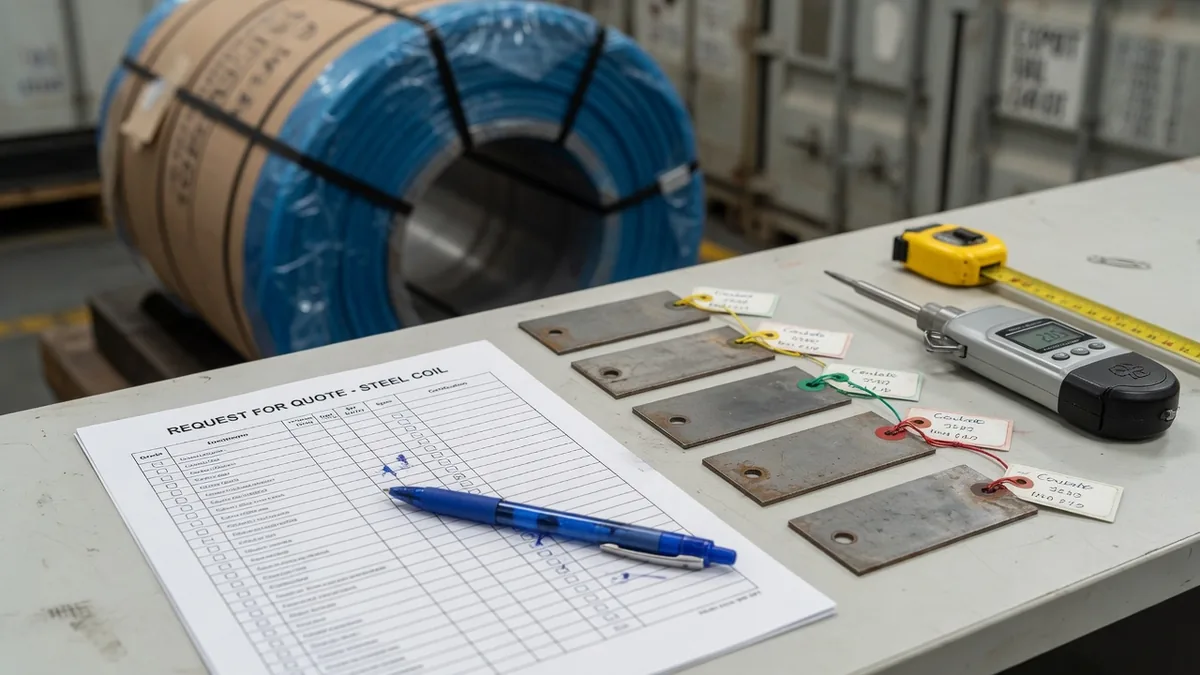
Most GI coil disputes are not mysterious metallurgy. They start when the purchase order leaves open coating mass, surface treatment, thickness basis, oil, packing, or document linkage. A short RFQ that only says “Z275 GI coil 0.5×1200” still leaves room for wrong grade, wrong spangle, wrong oil weight, and wrong packing for sea freight.
Use this checklist as the backbone of RFQs and POs for hot-dip galvanized coil / sheet.
1. Product identity
- Product form: coil, sheet, or strip
- Process: continuous hot-dip galvanized (not electro-galvanized unless intended)
- Standard family: ASTM A653 / EN 10346 / JIS G3302 / GB as applicable
If you need Al-Zn instead, switch to the GL product path and AZ designations—see GI vs Galvalume.
2. Grade and mechanical targets
Write the commercial or structural grade (for example DX51D+Z, SGCC, S350GD+Z). If the strip will be roll-formed tightly or stamped, add yield / elongation / hardness bands that matter for the process.
3. Coating mass
- Use G or Z designations with clear both-sides basis.
- Example classes often discussed: Z120, Z180, Z275—select for exposure, not habit alone.
- Deeper coating-weight logic: coating weight guide for roofing buyers.
4. Dimensions and coil geometry
- Thickness and whether it is base metal or total.
- Width tolerance needs.
- Coil ID (508 / 610 mm class).
- Max OD / max coil weight for your line and crane limits.
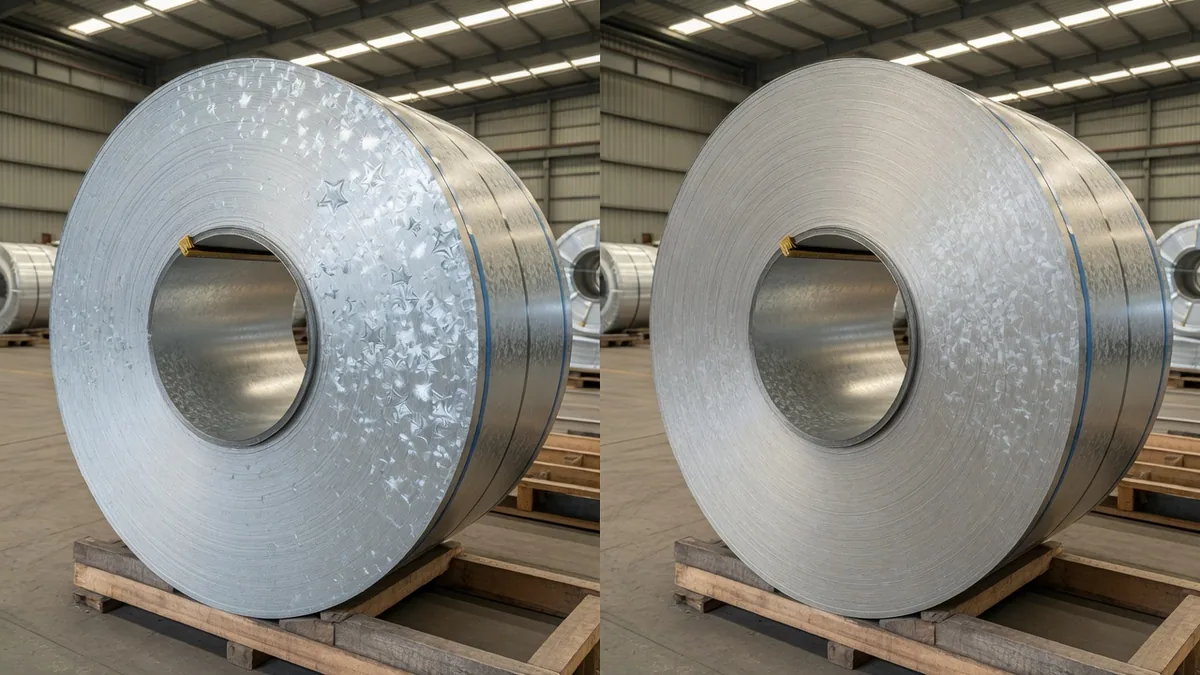
5. Surface, spangle, and treatment
- Spangle: regular / minimized / zero.
- Skin-pass if required for paint or appearance.
- Treatment: chromate, Cr-free passivation, oiled, dry, AFP.
- Oil is not a substitute for passivation on long humid voyages.
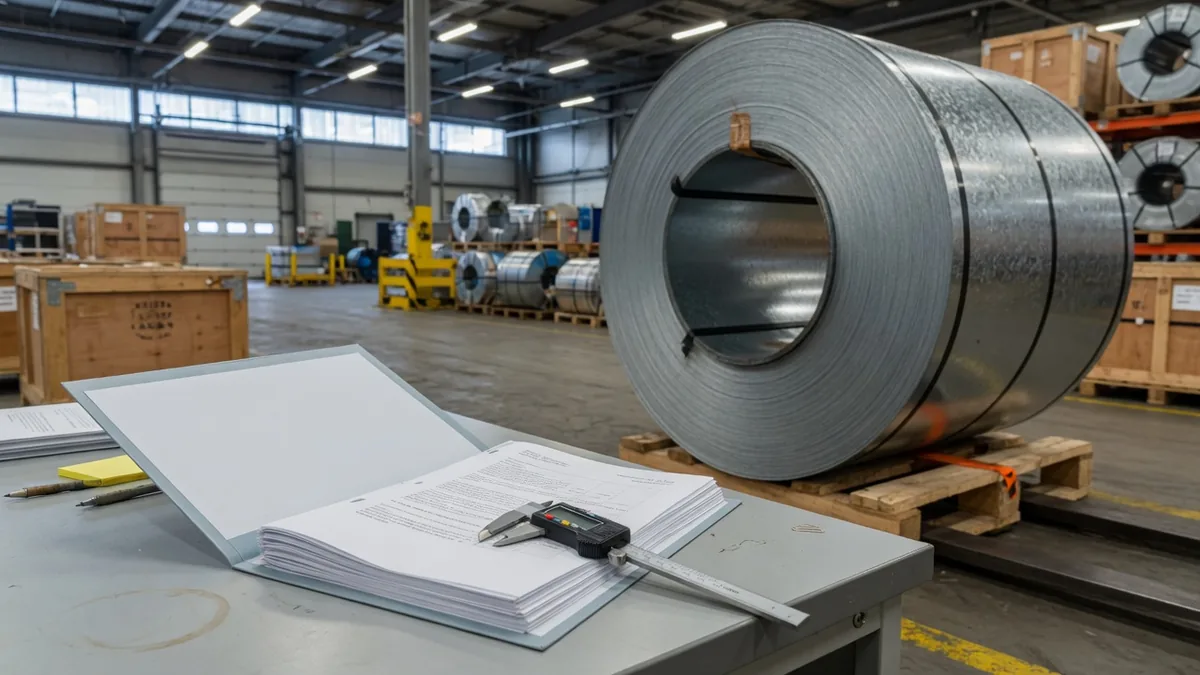
6. Tests and documents
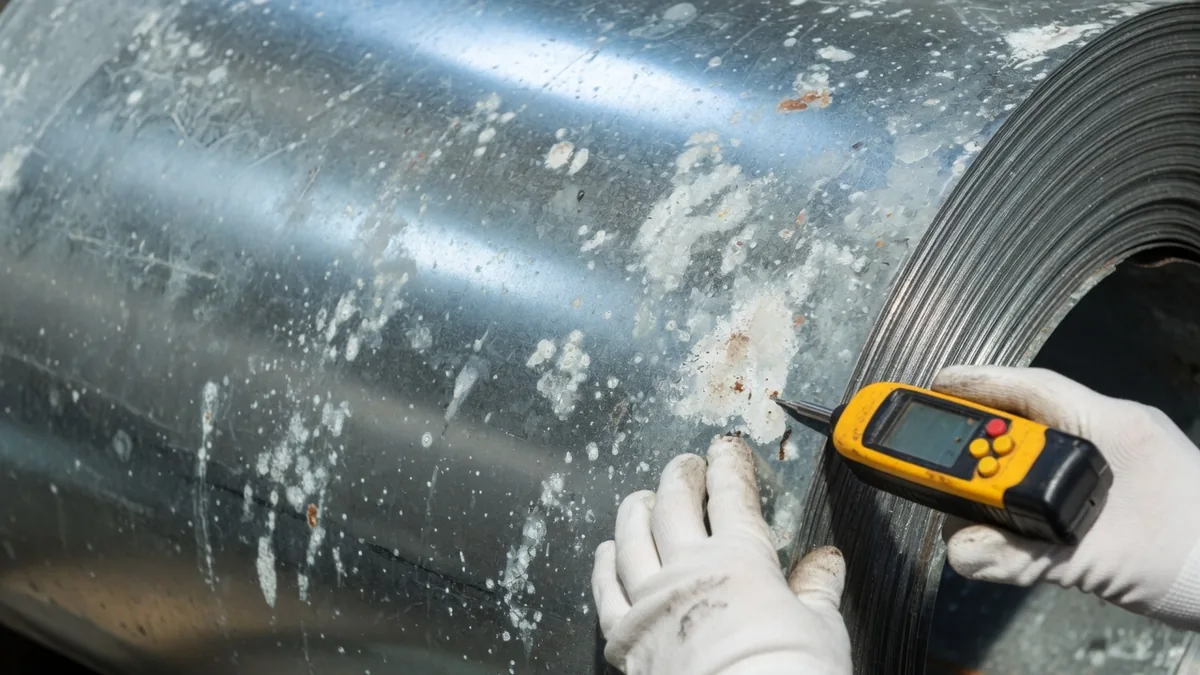
- Coating mass verification (triple-spot when the standard requires).
- Mechanical tests linked to heat / coil numbers.
- MTC type expected (for example EN 10204 3.1 when required).
- See also how to verify MTC before shipment.
7. Packing and logistics
- Seaworthy wrapping, edge protectors, desiccant, and vertical/horizontal shipping rules as agreed.
- Destination climate and storage plan.
- Port and Incoterms context for the commercial offer.
- Packing practices: export packing and rust prevention.
8. If the coil becomes roofing or color-coated product
- Roofing profile and cover width: roofing profiles tool.
- Prepainted path: PPGI / PPGL hub and RAL colors tool.
- PPGI vs PPGL substrate notes: PPGI vs PPGL durability guide.
Minimal RFQ template (copy / adapt)
Product: Hot-dip galvanized steel coil (GI)
Standard / grade: ________
Coating mass: Z____ (both sides basis)
Thickness × width: ____ mm × ____ mm (base metal / total: ____)
Surface: spangle ____ ; treatment ____ ; oil ____
Coil ID / max weight: ____ / ____ t
Quantity: ____ t
Destination port: ____
Documents: MTC ____ ; third-party inspection ____
Packing: seaworthy export packing for ____ voyage
End use / forming: ____
Key takeaway
A complete GI purchase order is a system: metallic coating + surface package + geometry + documents + packing. Specifying those five blocks early cuts revision loops and protects both mill production and buyer acceptance.